
Starcomms Nigeria: What Happened to the CDMA Network?
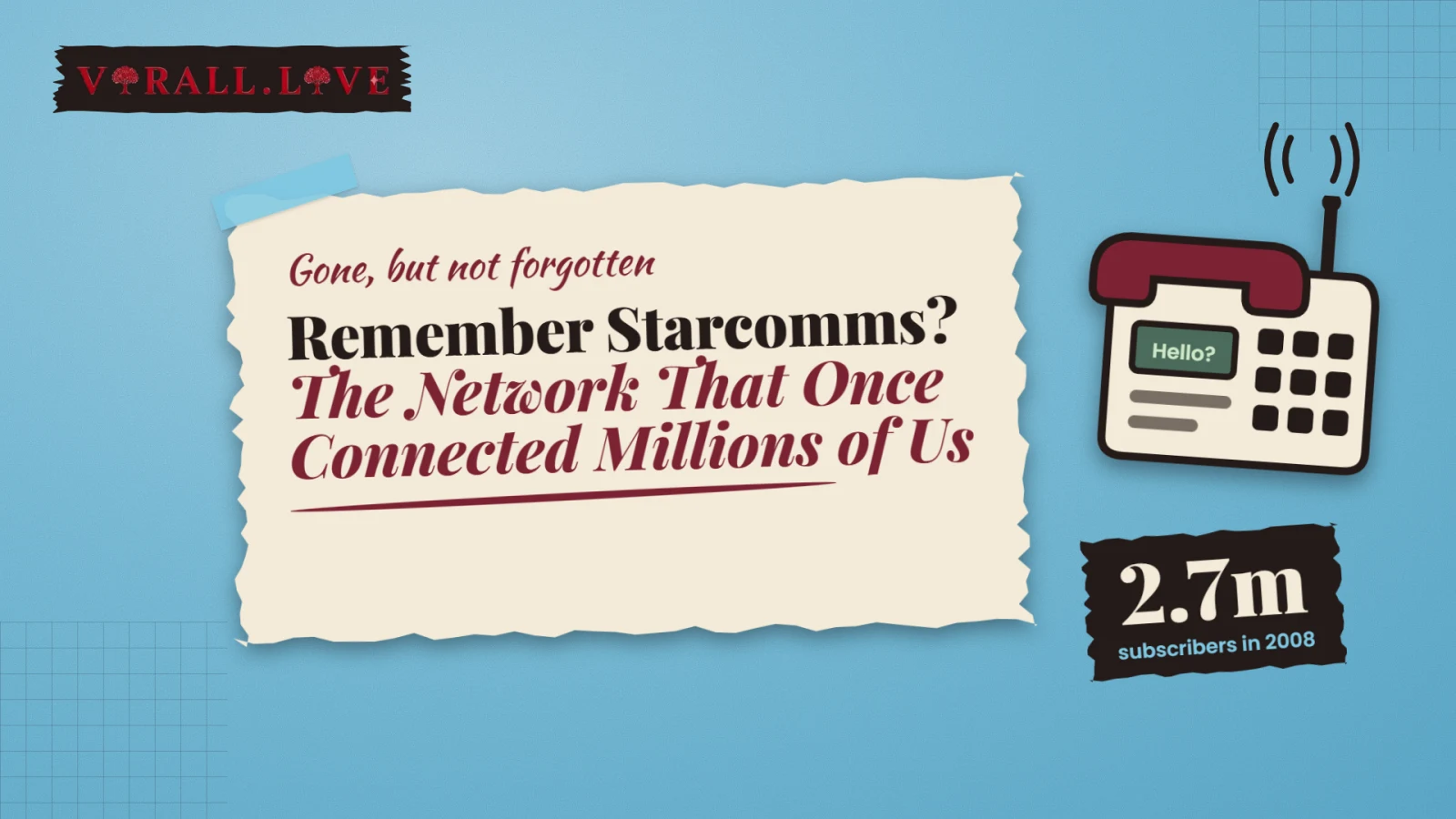
Some sounds never leave you. For millions of Nigerians, one of them was the Starcomms ringtone. Here is the story of the network that once ranked among the country’s biggest, why it faded, and where it is now.
Some sounds never leave you. For a certain generation of Nigerians, one of them is the ringtone of a Starcomms phone, a small, tinny melody that could turn every head in a room. Years after the network went quiet, people are still typing "starcomms ringtone" into search bars. They are also asking a gentler question: is Starcomms Nigeria still working?
The honest answer is no. But the story of how it got there deserves more than one line.
First, what was Starcomms?
Starcomms was a telephone and internet company that ran on CDMA, short for Code Division Multiple Access. Picture a crowded room where hundreds of people are talking at once. On a GSM network (the technology MTN, Airtel and Glo use), the room is divided so each caller gets their own slot. On CDMA, everyone talks at the same time, but each conversation carries its own secret code, so your phone only picks up the voice meant for you. Fans of CDMA argue it used the airwaves more efficiently and gave clearer calls and faster early data.
Its biggest strength in Nigeria was fixed wireless: a phone that sits on a table at home or in the office, but connects through the air instead of through cables on a pole. Today's closest cousin is the 4G or 5G home router. That mattered because, before the late 1990s, the only way to get a home phone was through NITEL, the old government phone company, and the waiting list could stretch for years.
When Starcomms was the future
In the late 1990s, the regulator, the NCC (Nigerian Communications Commission), began licensing private phone companies and ended NITEL's monopoly. Multilinks opened the door in 1998. Starcomms followed, and it did not simply follow, it ran.
In 2008, Starcomms became the first CDMA operator listed on the Nigerian Stock Exchange, which means ordinary investors could buy shares in it, the way people buy shares in banks. It was also the first company on the continent to launch EV-DO (Evolution Data Optimized), the CDMA world's early high-speed internet and the grandfather of the 4G data we use today.
By late 2008 it had reached 2.7 million subscribers, enough to be described as the fourth-largest telecoms operator in the country. Its slogan, "Starcomms, connecting people", sat on billboards and in the mouths of people who had never seen the inside of a boardroom.
What it felt like
For many households, a Starcomms phone was the first phone that lived in the house like a member of the family. A fixed wireless handset on a table, a short antenna, a number that belonged to everyone under that roof and not to one person. You may remember it ringing in the middle of dinner. You may remember the calls to relatives in the village, the "did you reach safely" calls, the ones where somebody just kept saying "hello, hello, can you hear me" until the line settled and the voice finally came through.
Later, Starcomms grew up with its customers. It offered mobile handsets, and even smartphones on its network, a move other CDMA operators would later copy.
Who was who: how the operators fit together
Starcomms did not fall alone. It belonged to a small family of companies, all running on the same technology and all fighting the same giants. Think of the market in three tiers. At the top were the GSM giants, MTN, Globacom, Airtel and Etisalat. In the middle were the bigger CDMA names: Visafone, Starcomms and Multilinks. At the bottom were smaller, struggling operators like Intercellular and Zoom Mobile. Here is how each one fit, and how each one ended.
Operator | Who they were | What happened |
Multilinks | The first CDMA company to get a licence (1996), starting operations in December 1998. | South Africa's Telkom bought it in 2007 for 410 million dollars, then struggled with its losses. A 2011 sale to Visafone for 52 million dollars fell through, and Multilinks was sold to Helios Towers Nigeria for 10 million dollars in November 2011. It was later part of the Capcom plan. |
MTS First Wireless | Launched Nigeria's first mobile phone network in 1992, then moved to CDMA by 2002. | Valued mostly for the airwaves it held, reported as some of the best in the industry. That made it a key piece of the Capcom plan. |
Starcomms | The most ambitious of the group: listed on the stock exchange, 2.7 million subscribers in 2008. | Heavy debts, a rescue merger that never closed, and a place on the regulator's inactive list in June 2014. |
Visafone | Founded in 2007 by Jim Ovia, the founder of Zenith Bank. It was built by buying three older CDMA operators: Cellcom, ITN and Bourdex. It hit one million subscribers within six months of its February 2008 launch, and about three million at its peak, the highest any CDMA operator in Nigeria reached. | Seen as the best managed and the last to fall. MTN bought it in 2016, mainly for its 800 MHz airwaves to launch 4G, moved its customers onto MTN's GSM network, and the company's liquidation was completed in the first half of 2024. |
Intercellular | Part of the original late 1990s wave. | Too small, too regional and too short of money. A 2015 comeback attempt under a new investor did not last. In 2018 the NCC withdrew its phone numbers, and in 2019 Airtel bought its airwaves for 70 million dollars. |
Zoom Mobile | A second-generation CDMA operator that began life as Reliance Telecom, and claimed 1.5 million subscribers at its height. | Declared inactive by the NCC in 2014, along with Starcomms. |
A modern way to see it: the CDMA operators were like a group of early Nigerian startups in the same sector. A few pioneers, one well-run leader, several that merged or sold for parts, and one big player that eventually bought the leader. And notice what MTN really wanted from Visafone. It was not the brand or the desk phones. It was the airwaves.
Why GSM won
It is easy to say "GSM was better", but the real reasons were more about licences, money and phones.
Licences. CDMA operators were first given regional licences, so a company licensed for Lagos and the South West could not legally serve a customer in Kano or Abuja. GSM giants like MTN could build nationwide from day one, and they were given a five year head start from 2001 to do it. In 2006, the NCC upgraded the CDMA licences to UASL (Unified Access Services Licence), which finally allowed national reach. By then, MTN already had around 40 million subscribers and Globacom, launched in 2003 with per-second billing, had around 15 million.
Phones. When GSM arrived in 2001, a SIM card could cost as much as ₦30,000, which made CDMA the cheaper option for many people. But as SIM prices fell and coverage grew, that advantage vanished. A SIM card could be moved between many phones, while CDMA handsets were locked to a specific network. Today, we take for granted that you can swap SIMs and networks. Back then, that freedom belonged to GSM.
Money and management. Many CDMA operators were undercapitalised, meaning they did not have enough money to build networks and survive the price wars. Industry reports also pointed to weak internal controls and poor management in parts of the sector. By the end of 2015, the two surviving CDMA operators had about 2.1 million subscribers between them, while GSM had grown to around 150 million.
One more piece of the puzzle is spectrum, the invisible airwaves that carry calls and data. The government, through the NCC, leases spectrum to operators, much like leasing prime land. Whoever holds good spectrum holds something valuable, which is why MTS's airwaves and Visafone's 800 MHz mattered even after the companies themselves failed.
The dream of Capcom, and why it stalled
By 2012, the three weakest operators had an idea: stop fighting alone. A new investor group called Capcom would put in about 200 to 210 million dollars, bring Starcomms, Multilinks and MTS together under one roof, keep the Starcomms name, and use the combined airwaves to build 4G LTE (Long Term Evolution, the standard behind 4G data). Starcomms' board unanimously recommended the deal, shareholders approved it, and trading in Starcomms shares was suspended in August 2012 while it was processed. Starcomms had even warned that it risked bankruptcy if the merger failed.
Imagine three struggling fintech apps agreeing to merge into one, keeping the name of the one already on the stock exchange, with a new investor paying off their debts and giving them fresh money. On paper, it is a rescue. In real life, it only works if every approval clears and the promised money actually arrives.
That is where the dream stalled. Nigeria CommunicationsWeek reported that approvals, administrative bottlenecks and legal knots hobbled the deal for months. Other reports say the plan fell through for lack of funding. In the end, Starcomms was delisted from the stock exchange, and the government ruled out a bailout for CDMA operators. By 2013, Starcomms' internet subscribers had dropped from 63,198 to 15,859 in a single year. And there was a deeper problem: merging three weak companies does not automatically create one strong one. It can just combine three sets of problems.
The slow goodbye
In June 2014, the NCC declared Starcomms and eleven other operators inactive, which means the regulator no longer recognised them as running services. By September 2015, the entire CDMA segment held just 1.58 percent of the market. In 2016, MTN acquired Visafone, the last big CDMA name still standing. In 2019, the NCC reported that CDMA held 0 percent of the Nigerian market, and the era was officially over.
Where is Starcomms now?
Starcomms is no longer a working network. It was declared inactive by the telecom regulator in 2014, and Nigeria's CDMA story effectively ended with MTN's takeover of Visafone in 2016 and the regulator's 2019 report of zero market share. What is left lives in other places: in drawers and old boxes of chargers, in a ringtone someone still hums, in the muscle memory of a number you can recite even now.
What it left behind
Starcomms did not fade because it did not matter. At its height, it was woven into millions of ordinary days. It helped end a monopoly and connected people who had waited years for a phone line. It lost to money, timing and scale, the same forces that reshape every industry. What it leaves behind is softer than a market share chart: the memory of the first number you ever learned by heart, of a phone that belonged to the whole house, of a voice from far away arriving through a small antenna.
Gone, but not forgotten.
Jargon decoder
CDMA (Code Division Multiple Access): a way of letting many people share the same airwaves at once, with each call carrying its own code.
GSM (Global System for Mobile Communications): the competing technology used by MTN, Airtel, Glo and 9mobile. It divides the airwaves into slots and uses removable SIM cards.
EV-DO (Evolution Data Optimized): CDMA's early high-speed internet.
4G LTE (Long Term Evolution): the standard behind today's 4G data.
Fixed wireless: a home or office phone or internet that connects through the air instead of cables.
Spectrum (and MHz): the airwaves that carry signals, leased by the government. MHz measures how wide a band of airwaves is, and bigger or better bands are more valuable.
NCC (Nigerian Communications Commission): the regulator that licenses and supervises telecom companies.
NITEL: the old government-owned phone company that was Nigeria's only option for years.
UASL (Unified Access Services Licence): the licence that lets an operator serve customers nationwide.
Subscriber: a customer with an active line.
Listed or delisted: being listed means a company's shares trade on the stock exchange. Delisted means they have been removed.
Undercapitalised: not having enough money to build and survive.
Merger: two or more companies joining into one.
Inactive: officially no longer running services, according to the regulator.
Liquidation: formally closing a company and selling what it owns to pay what it owes.
Migrated: moved over, as when MTN moved Visafone customers onto its own network.
Did your family have a Starcomms line?
Tell us what you remember: the number you knew by heart, the ringtone, the first call you ever made on it.
Discussion
Log in to join the discussion.
- Loading comments…